Why People Keep Pressed Flowers
Pressed flowers preserve a bloom’s shape and story. Learn how specimens became keepsakes, what pressing reveals, and how to choose a flower to save.
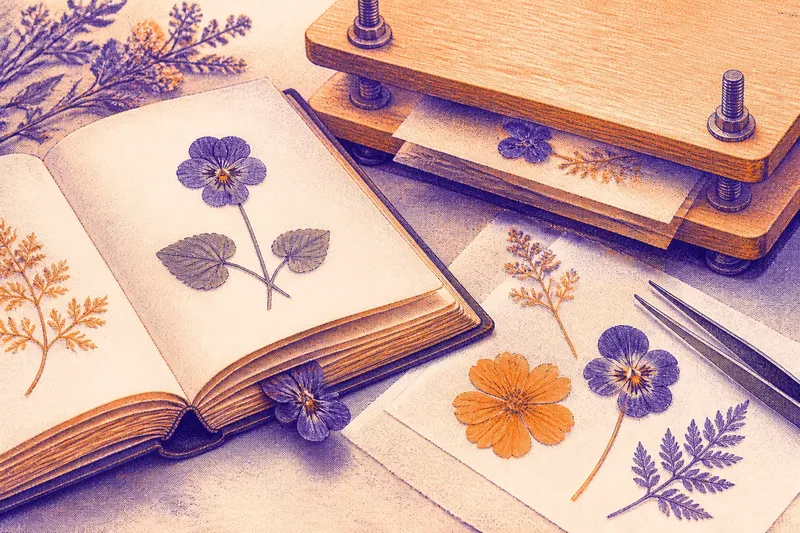
A dried violet slips from the pages of an old book, its color softened but its five petals still distinct. A pressed flower can be a record of a plant, a memento of a particular day, or both. The flower press sits between those purposes: it flattens a living form so that someone can look closely, remember, and sometimes identify what grew.
Why press flowers?
People press flowers to keep a bloom after its brief display has ended. The method preserves a recognizable outline and some of the plant’s finer features, such as leaf veins, petal arrangement, or the shape of a calyx. It does not preserve the flower as it looked when fresh. Flattening changes its volume, and drying often changes its color.
That trade is part of the appeal. A flower in a vase continues to ask for water and attention; a pressed bloom becomes still. Its flattened form invites a different kind of looking. The eye can follow where petals meet, notice how a leaf attaches to a stem, or compare two flowers that once seemed nearly identical in the garden.
Pressed flowers also carry associations that a botanical label cannot. A blossom from a childhood garden, a walk with a friend, or a day spent learning a plant’s name can hold a memory because someone chose to save it. The object may be small, but the act of preserving it marks a moment as worth returning to.
How did pressing become a study tool?
Pressed specimens became useful to plant study because they could be stored, transported, and compared. A living plant might be available only in a particular place or season. A dried specimen could remain available for later examination, helping collectors and botanists build records of what they had encountered.
A well-prepared specimen keeps more than a pretty flower. It can include leaves, stems, and, when practical, fruit or roots, along with a label recording the plant’s name, where it was collected, and the circumstances that help identify it. These details turn a dried plant into evidence of a particular occurrence rather than an anonymous decoration.
Herbaria, the collections where preserved plants are organized and cared for, make that record useful beyond the person who gathered it. Researchers and students can compare specimens, examine variation, and revisit identifications. The pressed plant is not a complete portrait: drying changes it, and some details are lost. But a carefully labeled specimen gives later observers something physical to inspect.
For a home gardener, this history offers a simple distinction. A keepsake can be chosen for its personal meaning and arranged for its appearance. A study specimen needs identifying parts and clear notes. Neither purpose is more valid, but knowing which one matters helps decide what to collect and how to label it.
What does a pressed bloom retain?
A flower usually retains its outline, the number and arrangement of its visible parts, and some surface detail. Color may fade or shift, especially as the specimen ages or meets light. Delicate petals can become translucent, and thick centers may dry unevenly. Pressing preserves a version of the flower, not an untouched copy.
Shape often survives best when the bloom is naturally thin. A pansy or violet can lie flat with its main features visible. A dense rose, with many overlapping petals, is harder to press as a single intact flower; it may be more legible as separate petals or as a side view. The right choice depends on what the keeper wants to notice.
Leaves can be as informative as petals. Their edges, veins, and attachment to the stem may help distinguish plants that share a similar flower. If the aim is study, keeping a leaf with the bloom often adds useful context. If the aim is a small keepsake, a single petal or flower head may better suit a card or frame.
Do not expect a pressed flower to preserve scent, softness, or the three-dimensional curve of a fresh bloom. Those qualities are lost or greatly reduced. What remains is a quiet record of arrangement and contour, best appreciated in good light without expecting it to perform the work of a photograph or a living plant.
Which flowers press well?
Thin, open flowers are usually easier to press than thick, tightly layered blooms. Violets, pansies, cosmos, buttercups, and many small garden flowers can show their shape clearly when laid flat. Fern fronds and leaves also press well and can provide a useful frame for a bloom.
Flowers with substantial centers, fleshy petals, or a lot of overlapping material may dry unevenly. A full peony or a rounded dahlia can trap moisture in its dense center, while its outer petals flatten first. Rather than forcing every flower into the same form, consider pressing a side view, a few loose petals, or a single outer layer.
Pick a bloom that is dry and in good condition. Rain or dew can prolong drying, and bruised petals will remain bruised in the finished specimen. Choose a flower that has opened enough for its parts to be seen but has not begun to wilt. If you do not know its name, jot down identifying notes while the plant is still nearby.
Collection also involves care for the garden and its rules. Take only what you have permission to gather, leave enough flowers for the plant and for pollinators, and avoid picking from protected places. Where identification or collection status is uncertain, leave the bloom in place and make a sketch or photograph instead.
How do you press one?
A traditional press uses absorbent paper, flat boards, and even pressure. A heavy book can serve for a modest keepsake if its pages are protected with clean paper, though a dedicated flower press makes it easier to arrange several specimens and adjust pressure. The essential idea is to keep the bloom flat while moisture moves into absorbent layers.
Arrange the flower before closing the press. Separate petals that cover important features, straighten the stem, and decide whether the bloom should face upward or show its profile. Place it between sheets of blotting paper or another absorbent, untextured paper, then put the layers between rigid boards. Avoid glossy paper, which does not absorb moisture well.
As the paper takes up moisture, replace damp sheets with dry ones. Handle the bloom gently; a petal that sticks to the paper can tear when lifted. Allow the specimen to dry fully before mounting it. The needed time varies with the flower’s thickness and the surrounding conditions, so use dryness rather than a fixed timetable as the cue.
Say you have a thin purple pansy from a pot by the kitchen door and want to keep its face intact. You could place it face up between absorbent sheets, spread one folded petal gently with a clean fingertip, and add a note with the date and the pot’s location. The expected result is a flat bloom whose markings remain easy to see, alongside enough context to recall where it came from.
It is not worth chasing an elaborate press, specialty papers, or perfect symmetry for a first keepsake. A clean book, absorbent paper, and a flower chosen for a clear reason are enough to begin. Extra effort matters when the specimen must be especially complete or useful for identification.
How should a specimen be labeled?
A label turns a pressed bloom from an attractive fragment into a small record. For a personal keepsake, note the plant name if known, where it grew, and why you wanted to save it. A date or season can help place the flower in memory, but the note need not become a full diary entry.
For a study specimen, include the plant’s name only when you can identify it with confidence. Add the collection location and habitat in plain language, such as “shady edge of the back garden,” plus the date and the collector’s name if the specimen may be shared. If identification is uncertain, write “unknown” or a tentative name rather than presenting a guess as fact.
Write the label on a separate piece of acid-free paper and keep it with the specimen, rather than writing directly on a fragile petal or leaf. A small envelope can hold loose parts, such as a seed or a detached petal, if those belong with the record. Avoid adding pieces from a different plant unless the connection is clearly marked.
How can you display or store it?
For display, mount the flower on paper with a small amount of suitable adhesive, or arrange it behind glass in a frame. A mat can keep the plant from touching the glazing and gives the composition breathing room. Keep the label close enough to remain connected to the bloom, especially if it contains the plant’s name or the place it came from.
Light can fade delicate colors, and damp conditions can damage dried plant material. Choose a dry place away from direct sun and avoid storing specimens where they may be crushed. For a collection meant to last, archival paper and a protective enclosure are preferable to ordinary tape or adhesive that can discolor or become difficult to remove.
A pressed flower need not be framed to matter. It can rest in a labeled envelope, a small portfolio, or a notebook with a few lines about the garden. Storage can be plain; the important point is to keep the specimen flat, dry, and associated with its note.
What questions come up?
Can any flower be pressed?
Most flowers can be flattened, but thick, fleshy, or densely layered blooms may dry poorly as whole specimens. Thin flowers and individual petals often show more clearly, so choose the form that preserves the feature you care about.
Will a pressed flower keep its color?
Some color may remain, but drying and exposure to light can alter it. A pressed flower is better treated as a record of shape and pattern than as a promise of fresh-bloom color.
Is a flower press better than a book?
A press offers a more even, adjustable arrangement and can hold several layers. A heavy book is a convenient choice for a small keepsake, provided absorbent paper protects its pages and the specimen lies flat.
Should I press a flower for identification?
A pressed specimen can support identification when it includes the parts needed to distinguish the plant and has a clear label. If the plant is unfamiliar, keep notes or consult a knowledgeable local botanist, garden society, or extension service rather than relying on a flower head alone.
What makes a keepsake last?
A pressed bloom lasts in memory as much through its accompanying details as through its petals. Record the garden bed, path, or pot where it grew; note whether it opened after rain or appeared beside another plant. Such observations give the flower a setting without asking the specimen to carry the whole story.
The same habit can deepen ordinary garden looking. A person who saves one bloom may begin to notice how a plant’s leaves meet the stem, how its petals overlap, or how its color changes as it opens. The press does not create those details; it gives them a reason to be observed and remembered.
Pressed flowers preserve a bloom’s form, but a good label preserves the circumstances around it. When choosing what to keep, decide whether you want a botanical record, a decorative fragment, or a reminder of a particular place. That small decision guides the choice of flower, the notes you make, and the kind of care the specimen will receive.